In August 2000 I purchased an Olympus C-3000 digital camera. This web page summarizes what I’ve learned about it, particularly about using it under free Unixes like Linux and BSD.
- Unix software
- Problems and (some) Solutions
- Olympus C-3000-specific Things
- Other links and resources
Unix Software
Graphical viewers and image editors
xv
a good display program. It includes simple color controls to change contrast/brightness/etc.
ee
the Gnome display program does thumbnails, so ee *.jpg is useful to look at what you have. It includes simple color controls to change contrast/brightness/etc. Mostly easy to use.
eog
“eye of gnome”, another gnome displayer. Not as sophisticated as ee; although apparently more memory concious.
generic software to get images from cameras, with some support for storage (keeping lists of thumbnails, etc.). It looks quite good at dealing with cameras, although version 0.4.x doesn’t seem to support my camera (Olympus C-3000). It’s also disappointing that it’s not obvious how to use it on a directory of files (like with my smart media)—it seems to want to talk to a camera.
the unix freeware photoshop clone. Very powerful, but with a steep learning curve. If ee’s simple controls aren’t enough, gimp will do what you want, and much, much more.
Utilities
rdjpgcom (part of libjpeg)
Shows comments in jpeg files. This patch (against version 6b) adds software from renamepics to allow it to dump EXIF info in the jpeg (exposure time and details, date, etc.), and this patch improves upon that code (apply the patches in order). For the less adventurous, see my i386 rpm or my SRPM.
jpegtran (also part of libjpeg)
Allows lossless rotation (run with -copy all to preserve the exif info). [Why doesn’t the camera have a tilt sensor to record its orientation in the file?]
Panorama software for Windows and Unix.
Problems and Solutions
Common problems and solutions (as I come to them).
Seeing Exposure Details in the Files
Problem: How do I display the exposure information (and time taken and other info) from Unix (without Olympus’s software)?
Solution: Get my patch to rdjpgcom (see above).
Wrong Color Balance
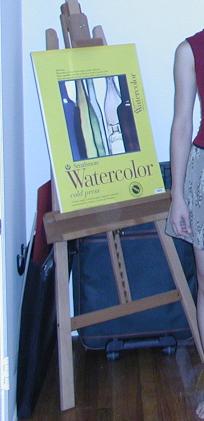
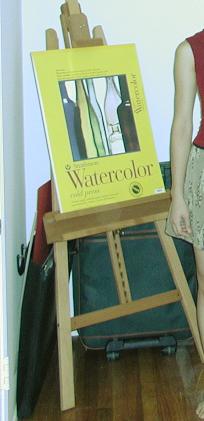
Problem: The C-3000 is supposed to auto-select for lighting conditions (outdoors sunny or cloudy, indoors with fluorescent or normal lights). Unfortunatly I often shoot indoors and found that it color-balanced for ourdoors. The left figure below indicates the result: awful skin tones, reds and yellows become dingy.
 |
 |
 |
| (none) | (some) | (more) |
Solution: (1) The best solution is to manually set the color balance beforehand. Of course. But since I’m not perfect: (2) I’ve had reasonable luck correcting things after-the-fact with the “curves” tool in Gimp (Image > Colors > Curves…). (This should also work in Photoshop.) These settings (olympus_indoor_correction_some.curves) work OK: I toned down blue quite a bit and up value, red, and green some. (See the results above on the right.) With lots of white it also helps to reduce all blue values with these settings (olympus_indoor_correction_more.curves)
Noise in long exposures
A great thing about digital cameras is you can take pictures at night with long exposures and get immediate feedback on how they look. But…
Problem: Long exposure pictures get a fair amount of noise. This dark current noise is well described by McCreary.
Solution: McCreary describes several Gimp/photoshop work-arounds. I hope to write a Gimp plug-in to make this easier.
How to I put my pictures on the web?
Problem: I’ve got all these great pictures on my disk, but how do I get them on the web? Just putting them in a directory is weak, often the pictures are too large, etc.
Solution: Gphoto should handle this (it has web page generating software), but I couldn’t figure out how to get it to work if the photos are on already disk rather than behind a serial cable in the camera.
I spent a couple of hours on some software to autogenerate web pages around a set of pictures. When it gets more mature, I’ll release it.
Olympus C-3000-Specific Issues
Lens protection: I like the idea of a cheap filter in front of my expensive, non-replacable camera lens. Jeremy McCreary has a very good discussion of ``lens armor’’ alternatives for the Olympus C-3000 models. I went with the Olympus CLA-1 conversion lense adaptor, and two 43mm UV filters, one with the glass knocked out (so it acts as a 43-43mm extension). (Tip: to make the extension, I got an inexpensive Teffin 43mm UV filter. One hit on a screwdriver with a hammer in the middle shatters the lense. The pieces then fall out with a little wiggling (be careful!). There will be an internal ring that used to hold the lense in place, but it should unscrew easily if you hold it with pliers.)
I went with the 43mm approach because: (1) There seem to be a reasonable number of 43mm filters available of various kinds (I had no real investment in prior filters). (2) It doesn’t cause vingnetting (I’ve verfied this). (3) I can still get the Olympus accessories if I want.
Other Web Sites
- Jeremy McCreary’s excellent web pages have a good discussion of many issues relevant to digital cameras