

SPHERE Team Kicks Off Year 4 with All-Hands Meeting at Northeastern University
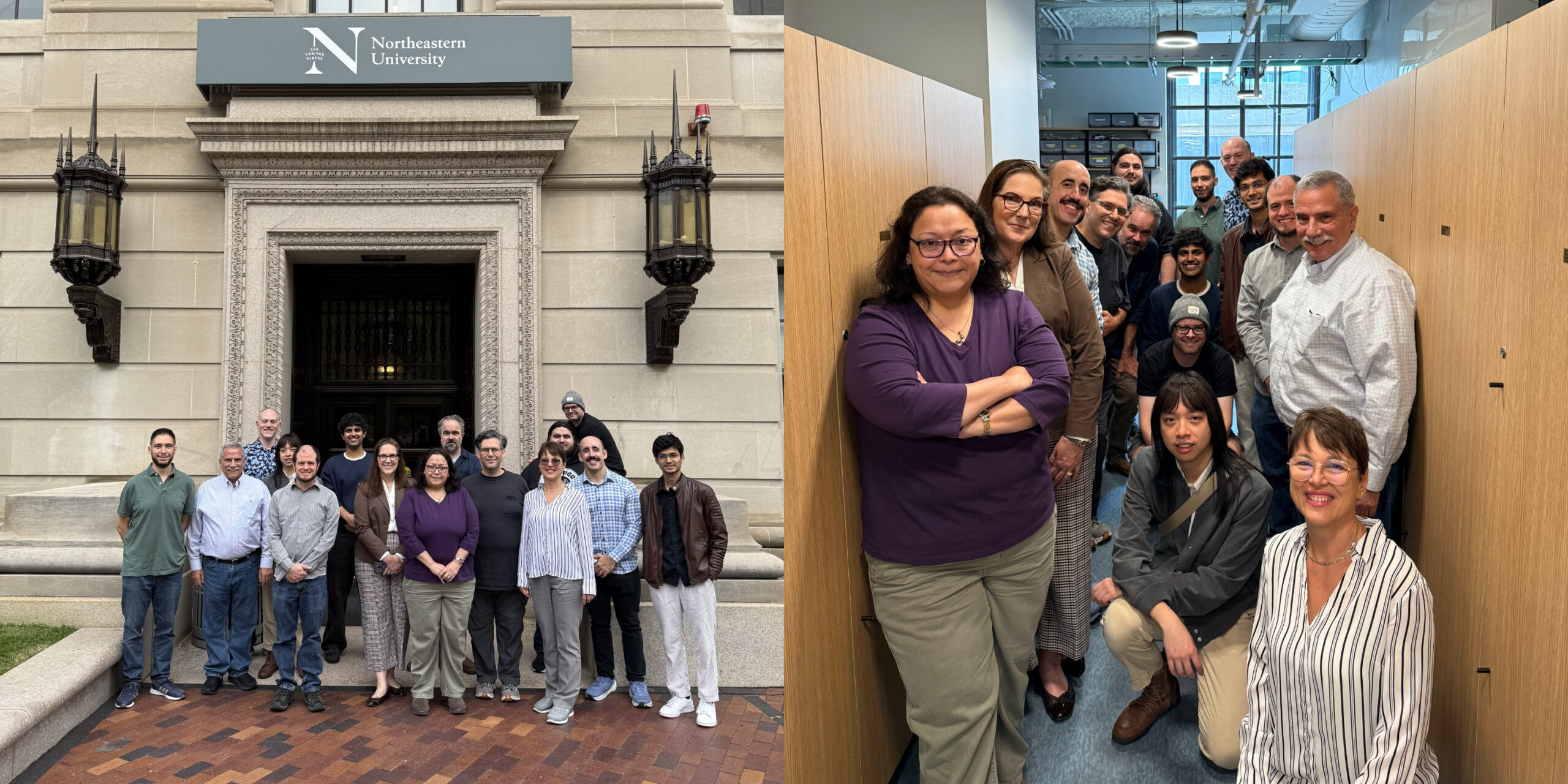
The SPHERE team gathered at Northeastern University in Boston on October 1–2, 2026, for a two-day all-hands meeting to review progress, address challenges, and establish priorities for Year 4 of the NSF-funded research infrastructure project. The meeting brought together researchers, developers, operations, and project management staff from the USC Information Sciences Institute (USC-ISI), Northeastern University, and the University of Utah.
With SPHERE’s infrastructure continuing to expand and its research and education user communities growing, the meeting focused on completing and integrating new capabilities, improving usability and reproducibility, and helping more researchers successfully use SPHERE for cybersecurity and privacy experimentation.
Day 1: Reviewing Progress and Planning for Year 4
The first day featured discussions spanning SPHERE’s hardware infrastructure, connectivity, user interfaces, reproducibility, community engagement, operations, and sustainability.
Technical discussions covered the status of SPHERE’s diverse computing and networking resources, including efforts to connect geographically distributed facilities using the NSF-funded FABRIC research infrastructure. The team also reviewed opportunities to improve user interfaces, simplify experiment setup, automate workflows, and make research artifacts easier to reproduce and reuse.
Community outreach and engagement was another major focus. As SPHERE enters its fourth year, the team is shifting greater attention from raising awareness to helping researchers and educators conduct successful experiments. Priorities include hands-on tutorials, workshops, hackathons, improved onboarding and documentation, and targeted engagement with communities interested in SPHERE’s distinctive Internet of Things (IoT), industrial control systems (ICS), and multi-facility capabilities.
The afternoon concluded with a review of development milestones, planning for ongoing operations, and discussions of budget and long-term sustainability.
Inside Northeastern’s IoT Lab
A highlight of the first day was a tour of Northeastern University’s SPHERE IoT laboratory, which provides researchers with remote access to real consumer devices for controlled, reproducible cybersecurity and privacy experiments.
The dedicated 500-square-foot facility includes 96 enclosed shelves designed to accommodate hundreds of IoT devices, ranging from smart TVs and speakers to smart locks and other connected consumer products. Custom-built mechanisms, including robotic button pushers, touchscreen actuators, infrared controllers, cameras, and microphones, enable researchers to interact with physical devices remotely while monitoring their behavior and collecting experimental data.
The tour gave team members a firsthand look at the specialized infrastructure required to make physical-world experimentation remotely accessible and reproducible. It also highlighted practical challenges involving device reliability, automation, networking, and the need to reset devices between experiments.
These capabilities are particularly important as SPHERE expands its IoT offerings, works toward its goal of supporting 500 devices, and prepares to accommodate increasingly diverse research needs.
Day 2: Addressing Challenges and Setting Development Priorities
The second day concentrated on identifying and resolving technical challenges associated with SPHERE’s IoT and ICS facilities and prioritizing development work for Year 4.
Discussions addressed improving the reliability and monitoring of IoT devices, preserving experimental data, strengthening integration between facilities, and enabling researchers to incorporate their own devices and testbeds into SPHERE experiments. The team also explored opportunities to expand supported device types and improve automation, documentation, and user support.
The ICS discussions highlighted progress at the University of Utah and remaining work to bring additional industrial control hardware online, improve resource abstractions, and support repeatable experiments across different control systems and physical processes.
Building on these discussions, the team identified development priorities involving infrastructure reliability, security, cross-facility connectivity, reproducibility, and support for emerging research needs.
Looking Ahead
The two-day meeting provided an opportunity for team members working across SPHERE’s geographically distributed facilities to exchange ideas, address shared challenges, and coordinate their efforts.
A recurring theme was the importance of moving beyond individual infrastructure capabilities toward a more integrated, reliable, and accessible research environment. As SPHERE continues through Year 4, the team is placing increased emphasis on helping researchers and educators take full advantage of its resources, demonstrating compelling multi-facility experiments, and supporting reproducible research that builds on the work of others.
The discussions and priorities established during the meeting will help guide SPHERE’s continued development and its transition toward sustained community use.