Making Room in a Crowded Wireless Spectrum
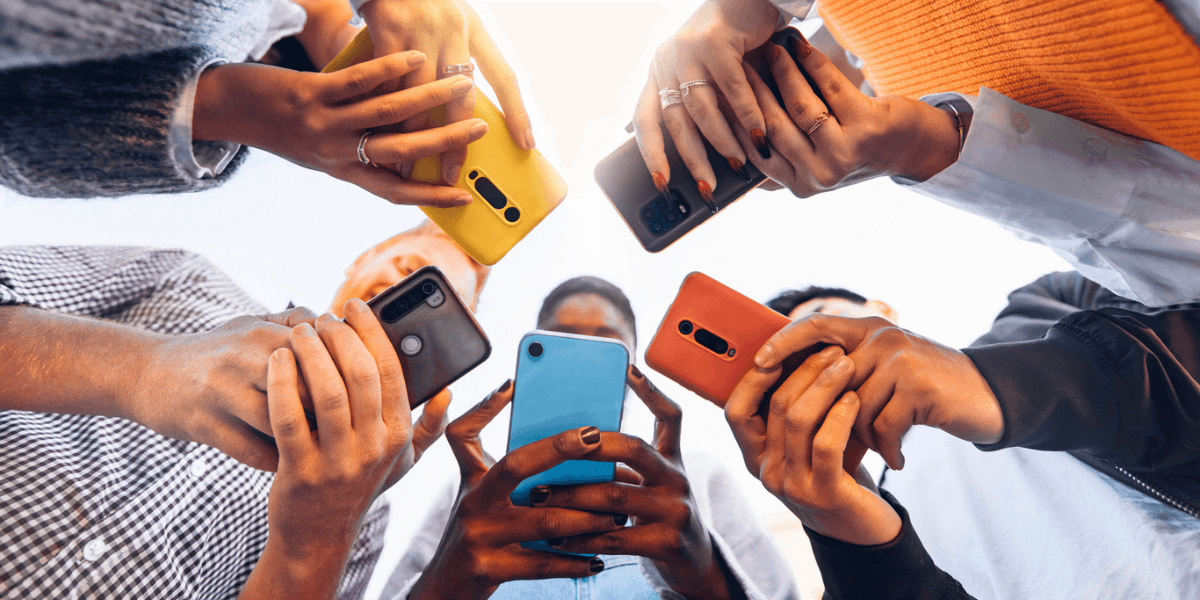
More devices. Higher Speeds. Limitless connectivity. A never-ending flow of new content to download and stream and experience with augmented or virtual reality. This is the future we’re speeding towards. But all of those applications need wireless bandwidth, and the wireless spectrum is becoming increasingly crowded and complex.
RF (radio frequency) autonomy is a way to deal with the spectrum crowding and complexity that is coming down the pike. With RF autonomy, radios adapt automatically to the wireless environment, making use of segments of bandwidth that would otherwise go unused.
In October 2022, the U.S. Defense Advanced Research Projects Agency (DARPA) put out a call for proposals to develop high-throughput, streaming-data processors capable of reconfiguring autonomously to detect and characterize RF signals in complex environments.
In other words: they were looking for researchers who could significantly level up the currently available RF autonomy methods.
And the Award Goes To...
Last month it was announced that a team of researchers led by Principal Investigator Matthew French, a research director in the Computational Systems and Technology division at USC’s Information Sciences Institute (ISI) and co-PI John Paul Walters, also from ISI, a research institute of the USC Viterbi School of Engineering, were selected for Phase I of the program. The team was awarded nearly $9 million, with a Phase 2 Option of nearly $10 million.
“Our RF spectrum is starting to fill up,” said French. “Government and commercial industries are trying to do more to share the spectrum, but in order to do that they have to be agile. You need very rapid sensing to figure out who is using what frequency when, and how to not interfere with them. So this project is really about how to share the spectrum more efficiently.”
The Tasklet at Hand
French and his team proposed TRACER – the Tasklet Reconfigurable Agile speCtrum procEssoR – which will provide a revolutionary advancement of autonomous RF spectrum signal processing systems.
“We came up with a hardware and software co-design technique centered around the concept of a ‘tasklet,’ which is the minimum viable processing unit that you could do in both software and hardware to address waveform agility,” said French. “And the idea was to design out from that.”
Walters added, “Tasklets can be switched really fast — a few tens of nanoseconds — which allows TRACER to adapt the software and hardware at waveform timescales. This adaptivity allows a single TRACER processor to perform the work of many existing traditional processors or FPGAs [field-programmable gate arrays, which are programmable circuits commonly used for these tasks].”
The Example in Your Pocket
French used the example of a cell phone to explain. “Let’s say a future cell phone system can use any frequency, which is where 6G and future systems are headed. How do you determine who can operate what frequency and when?”
RF autonomous systems work by adhering to a set of policies. “User A might have paid for the primary access for a certain frequency set. But if they’re not using it, then user B can use it. So user B then has to figure out if it’s being used,” explained French. “These signals can be very transient, very fast. So you need really fast sensing and reaction to make these kinds of systems viable.”
With TRACER, those decisions are not made by rules set in advance, rather they are made automatically and intelligently – sensing the spectrum and adapting to the perceived environment – which leads to increased robustness and efficiency.
A Team Effort
The TRACER team is comprised of leaders from USC, MIT, NYU, and Shared Spectrum Corporation working together to make this hardware / software co-design a reality.
“Shared Spectrum and the NYU Wireless center are leading the applications, specifications, and testbed. Our software team is led by John Paul Walters and MIT. ISI is leading the hardware with strong assistance from USC campus and NYU,” said French.
French and Walters are joined by: Saman Amarasinghe from MIT; Brandon Reagan and Sundeep Rangan from NYU; Ajey Jacob, Andrew Rittenbach and Andrew Schmidt from ISI; Massoud Pedram from USC’s Ming Hsieh Department of Electrical and Computer Engineering; and Mark McHenry and Ihsan Akbar from Shared Spectrum Corporation.