USC Astronautical Students Provide Support for NASA’s Artemis 2 Mission
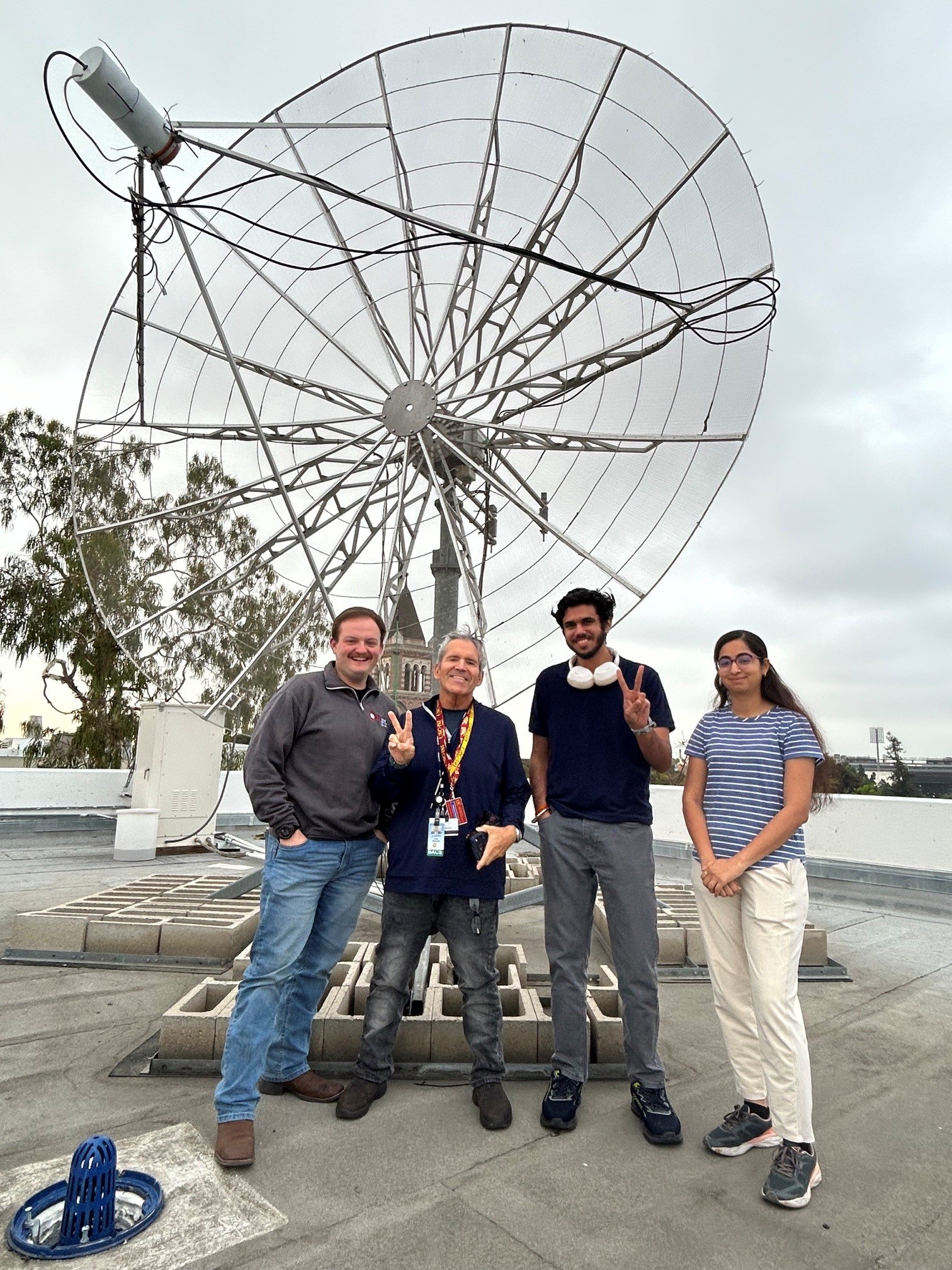
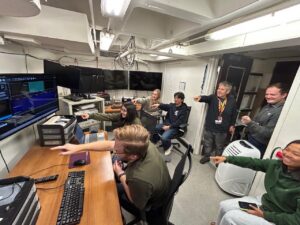 As the world watches NASA’s Artemis 2 mission propel humanity back toward the Moon, a dedicated team of students from the Department of Astronautical Engineering ASTE-566 Class and the Space Engineering Research Center (SERC) is doing more than just observing—they are tuned in to the spacecraft’s very heartbeat.
Chosen as one of approximately 40 teams across 14 countries, the USC group is serving as an independent “backup” for NASA. Using the university’s high-powered ground operating station and dish antenna, these Master’s students are tracking the Orion spacecraft as it maneuvers through its high elliptical orbit.
Capturing Data from the Deep
The mission involves monitoring the “one-way” data transmissions Orion sends back to Earth. This telemetry includes vital information on the spacecraft’s propulsion systems, electrical health, and navigation computations. By recording these signals independently, the USC team provides NASA with a redundant data set that helps ensure no information is lost during this historic journey.
“We’re watching for a frequency to pop up,” said David Barnhart, Research Professor of Astronautical Engineering and Director of SERC. “We’ll send it all to NASA. They’ll then help identify, maybe tune, or update the telemetry systems for future lunar missions.”
From the Classroom to the Cosmos
For the students involved, the project is the ultimate real-world application of their studies. Michael Gallagher, a Master’s student and member of the U.S. Space Force, noted the thrill of tracking the mission in real-time. “You can watch as the crewed capsule goes in its first high elliptical orbit,” he said, reflecting on the scale of the Artemis rockets as “skyscrapers that move.”
Fellow student Vidhi Gadhia, who previously worked with the Indian Space Research Organization (ISRO), is utilizing the experience to further her goals in human spaceflight. Her focus is on the challenges of keeping astronauts safe in the vacuum of space, dealing with zero gravity and solar radiation.
A Legacy of Space Excellence
The project continues USC’s long-standing tradition of excellence in astronautical engineering. The university is the alma mater of Neil Armstrong, the first human to walk on the moon, who earned his Master’s degree here.
Beyond Artemis 2, the ASTE Class project has to find their own “lost satellites” and the team at SERC is staying busy, students are currently in the clean room finalizing a new cubesat satellite called MAVERIC scheduled for launch on July 1st.
As the Earth rotates and the Orion spacecraft passes over Los Angeles again, the USC team will be ready, dishes pointed at the stars, waiting for the next signal to lock in.