ISI News
Carl Kesselman Wins 2026 HPDC Achievement Award
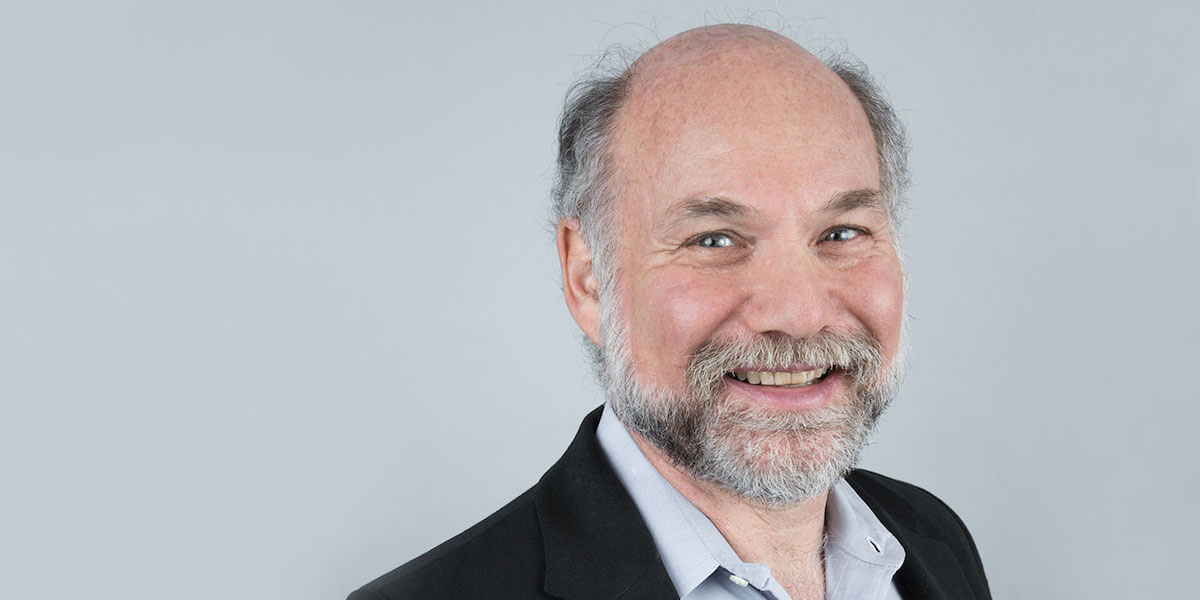
Carl Kesselman, one of the architects of grid computing, has received the 2026 Achievement Award in High Performance Distributed Computing, a career honor from a community that helped make today’s data-driven science possible.
The award recognizes “his contributions to high-performance distributed computing in the areas of grid computing architecture and applications, as well as his community leadership,” according to the announcement. Kesselman delivered a keynote address and was honored at the HPDC 2026 conference in July in Cleveland.
The recognition brings Kesselman back to a community he served as general chair and program chair—and to ideas he helped turn into technology used worldwide.
“It’s nice to be recognized for the work,” said USC Viterbi’s Kesselman, the William M. Keck Professor of Engineering and a professor in the Daniel J. Epstein Department of Industrial and Systems Engineering and the Thomas Lord Department of Computer Science, Department of Population and Public Health Sciences in the Keck School of Medicine, and Biomedical Sciences in the Ostrow School of Dentistry. He is also a USC Information Sciences Institute fellow within USC Viterbi and USC Stevens; director of ISI’s Informatics Systems Research Division; and director of the Center for Discovery Informatics in the USC Michelson Center for Convergent Bioscience.
The award carries added significance because HPDC was a central forum for the emergence of high-performance distributed computing. When the conference identified the most influential papers from its first 20 years between 1992 and 2012, four were co-authored by Kesselman, recognition that his research helped shape grid computing from its earliest days.
Building a worldwide computer
To understand why Kesselman’s work earned HPDC’s highest recognition, it helps to return to the problem he and his collaborators set out to solve nearly three decades ago.
In the 1990s, scientists could not easily use computing resources located at different institutions as parts of one system. A researcher might need a supercomputer at one university, data stored at a national laboratory and a specialized instrument somewhere else, but there was no simple way to connect them.
Kesselman and Ian Foster, a University of Chicago and Argonne National Laboratory computer scientist widely recognized as another pioneer of grid computing, developed a solution. They envisioned grid computing as something like an electrical grid: Just as electricity can come from many power plants, computing power, data storage and scientific instruments could be drawn from many institutions and securely combined to solve a single problem.
They co-founded the Globus Project to make that idea real. The open-source effort supplied the connective tissue: tools to identify users, locate resources, move massive files and coordinate work across organizations. Scientists could focus on research instead of manually stitching together every machine and dataset.
The approach proved its value in fields where the problems and data were too large for any one institution. Globus technologies were used in the international computing infrastructure supporting CERN’s Large Hadron Collider, whose experiments produced the evidence for the Higgs boson.
The grid was not the modern commercial cloud, but it demonstrated an essential principle behind it: computing resources could be pooled and delivered across a network when people needed them.
“We had a global, on-demand computing platform a decade before Amazon Web Services,” Kesselman said.
Kesselman’s later research grew from a problem he first encountered while developing grid computing: Connecting computers and data is not enough. Scientists also need systems that help them collaborate effectively and turn those shared resources into meaningful discoveries.
That challenge led him to work with experts in medicine, public health and biomedical science. By learning how researchers in those fields collect data, conduct studies and define success, Kesselman can identify needs that computer scientists might otherwise overlook and determine whether the technologies his team develops actually improve the way science is done.
FaceBase, for example, is an NIH-supported resource that helps craniofacial and dental researchers reuse complex datasets. His group has also collaborated with ophthalmologists on telemedicine and machine-learning tools that detect glaucoma from retinal images. The common goal is trustworthy data and systems that let specialists work together.
“Ultimately, what I’ve managed to spend my career doing is looking at how we can apply advanced technologies and good engineering to solve important problems,” Kesselman said.
Recognition—and the work ahead
The HPDC award joins honors including the Lovelace Medal from the British Computing Society and the Goode Memorial Award from the Institute for Electrical and Electronic Engineers (IEEE) Computer Society and the IEEE Internet Award. Kesselman is also a Fellow of the British Computer Society, the IEEE and the Association for Computing Machinery (ACM).
He is now developing systems that record not only how researchers performed an analysis, but also why they selected particular data and methods. Kesselman is also studying how AI agents could help researchers from different disciplines communicate, collaborate and overcome misunderstandings.
The goal remains the same as it was with the grid: make sophisticated computing serve ambitious, collaborative science. As Kesselman put it, technology “needs to be productive, and it needs to work. And it needs to be better.”
Published on September 18th, 2026
Last updated on September 18th, 2026