ISI News
“ISI Is a Great Place If You Want to Change the World”
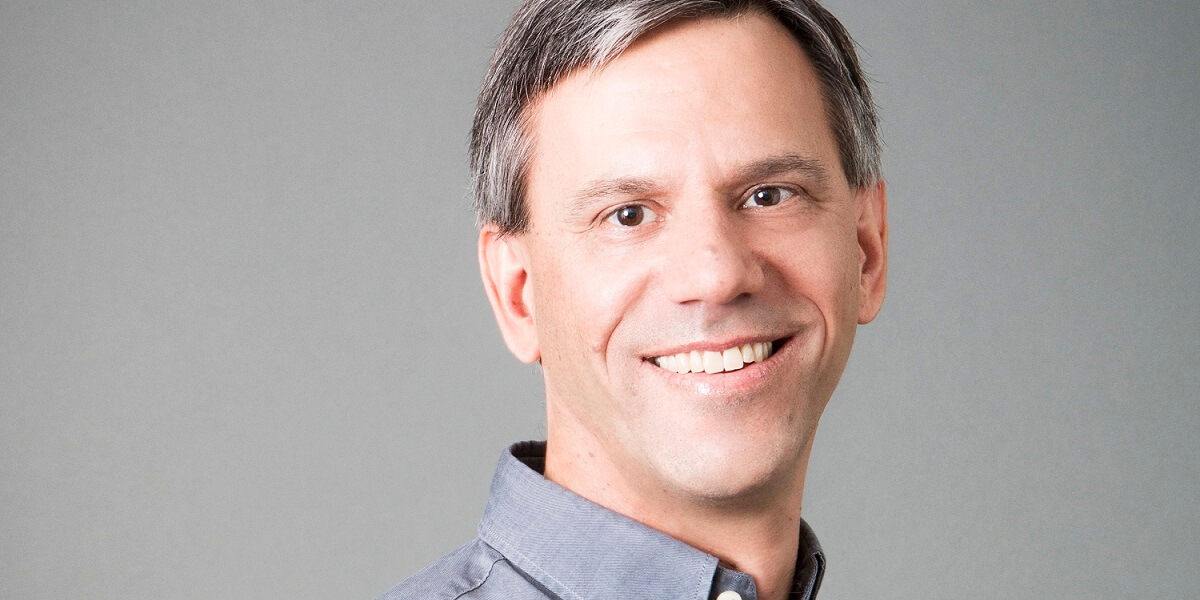
For more than three decades, USC Viterbi and USC Stevens’s Craig Knoblock has made a difference at the USC Information Sciences Institute, the university’s powerhouse computer science institute. Born in upstate New York and educated at Syracuse and Carnegie Mellon universities, Knoblock and his wife, Claire Bono, headed west to the land of Troy in 1988 — he to ISI, she to become a lecturer at what is now the Thomas Lord Department of Computer Science. Knoblock, a research professor of computer science and spatial sciences and former vice dean of engineering, hasn’t looked back.
Author of more than 400 journal articles, book chapters, and conference and workshop papers, Knoblock — a fellow of the IEEE, the Association for the Advancement of Artificial Intelligence (AAAI) and the Association for Computing Machinery (ACM), and a past president and trustee of the International Joint Conference on Artificial Intelligence (IJCAI) — served a distinguished eight-year term as ISI’s executive director, the first two as interim director, before stepping down in July. ISI has about 130 researchers, 80 Ph.D. students, and 70 support staff.
Knoblock, whose research involves building smart tools to gather messy online data and organize it so computers can quickly search and understand it, spoke about his time leading ISI, his feelings about the institute, and his plans for the future.
How is ISI different today than when you first stepped in as interim director in 2018? What’s changed?
One of the biggest things that has changed is that I think ISI is better integrated and organized now. When I took over, it was a little bit confusing, and not everyone was even in a division within ISI. We moved people around so that they fit better in terms of the existing structures. We rationalized the organization.
One of the things that we’ve managed to do during the time I was director was to really encourage and grow collaborations across the divisions – not just within the divisions.
We also encouraged more collaboration across locations [ISI has offices in Marina del Rey (California), Arlington (Virginia), and Boston (Massachusetts).] Today, I see a lot more of that going on. To help make that happen, we began holding institute-wide meetings on Zoom for everyone as opposed to only for divisions.
What makes ISI so special?
ISI has always been a place where people have focused on building real things. Look at its history. Some of the early work here was building the initial infrastructure for the ARPANET, which became the Internet. Things like the domain name system and protocols for video conferencing also came out of ISI. And then there was the work on MOSIS, which was an idea to take multiple designs for chips and put them onto a single wafer to produce them at a much lower cost. Those are just some of the examples of the culture here, which is about having impact. ISI has a sort of academic environment but one focused on real-world problems with the infrastructure, the people and the culture to support it. ISI is a great place if you want to change the world.
What are you proudest of during your time leading ISI?
I’m really proud that we managed to transform the original MOSIS into a microelectronics hub called California DREAMS, a reinvention of MOSIS as MOSIS 2.0. [The ISI-led California Defense Ready Electronics and Microdevices, or California DREAMS, is one of eight regional hubs created to advance microelectronics innovation and strengthen the U.S. semiconductor supply chain.]
Revenue from the original MOSIS, which had historically been an important part of ISI’s finances, was drying up. We hired a couple of consultants, including Zach Lemnios, and asked, “How do we reinvent this?” Together, we developed a plan that eventually led to the California DREAMS hub. [DREAMS is home to MOSIS 2.0, which works with Department of Defense-ready fabrication facilities to produce advanced compound semiconductors needed for technologies such as 6G and beyond.] I have to give [Interim ISI Executive Director] Steve Crago a lot of credit because he’s the one who really led the charge and made this happen.
I believe five or six of the eight regional hubs are now using MOSIS 2.0, which is growing and doing very well. All of this is allowing the United States—and USC—to take a greater leadership role in developing the next generation of semiconductors.
AI has become ubiquitous. How is it shaping how research is done at ISI?
The tools are amazing. Just about everything we do has been changed by AI, from writing proposals to writing papers to research to brainstorming ideas. I’ve been encouraging the engineers and the students I work with to make sure that they’re really leveraging it. You can build systems and write papers and do many other things so much faster with AI. It’s a huge win to be able to accelerate the pace of research.
What’s next for you?
I’m going back to research. I’ve been working on this problem of finding critical minerals for a while now. [Knoblock created a database to help organizations find new sources of critical minerals.] So, I have ongoing projects, and I have a number of proposals related to this. It’s also been really nice to just spend time thinking, having the time to come up with new ideas. ISI’s been a great place, and a great place to grow my career. Being here has worked out really well for me.
Published on October 19th, 2026
Last updated on October 19th, 2026